
Last reviewed: May 2026
Key Takeaways
- Sleep problems affect up to 70% of children with ADHD, driven by the same neurobiological systems that underlie attention dysregulation.
- Circadian rhythm delay is a documented feature of ADHD. Many children cannot fall asleep early because their body clock genuinely runs late.
- Poor sleep worsens core ADHD symptoms, creating a compounding loop that can be mistaken for the ADHD itself worsening.
- Stimulant medication timing directly affects sleep onset and should be reviewed if sleep is disrupted.
- Melatonin has evidence as a circadian aid for ADHD-related sleep delay and should be used under medical supervision. Timing of the dose matters as much as the dose itself.
- Standard sleep hygiene needs adaptation for the ADHD brain. Predictable wind-down structure matters as much as screen time.
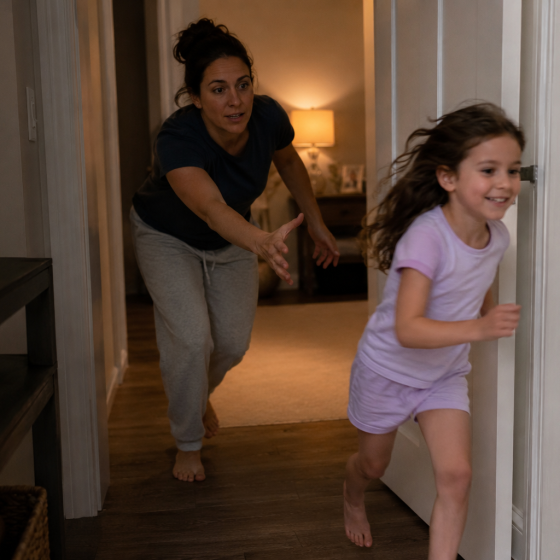
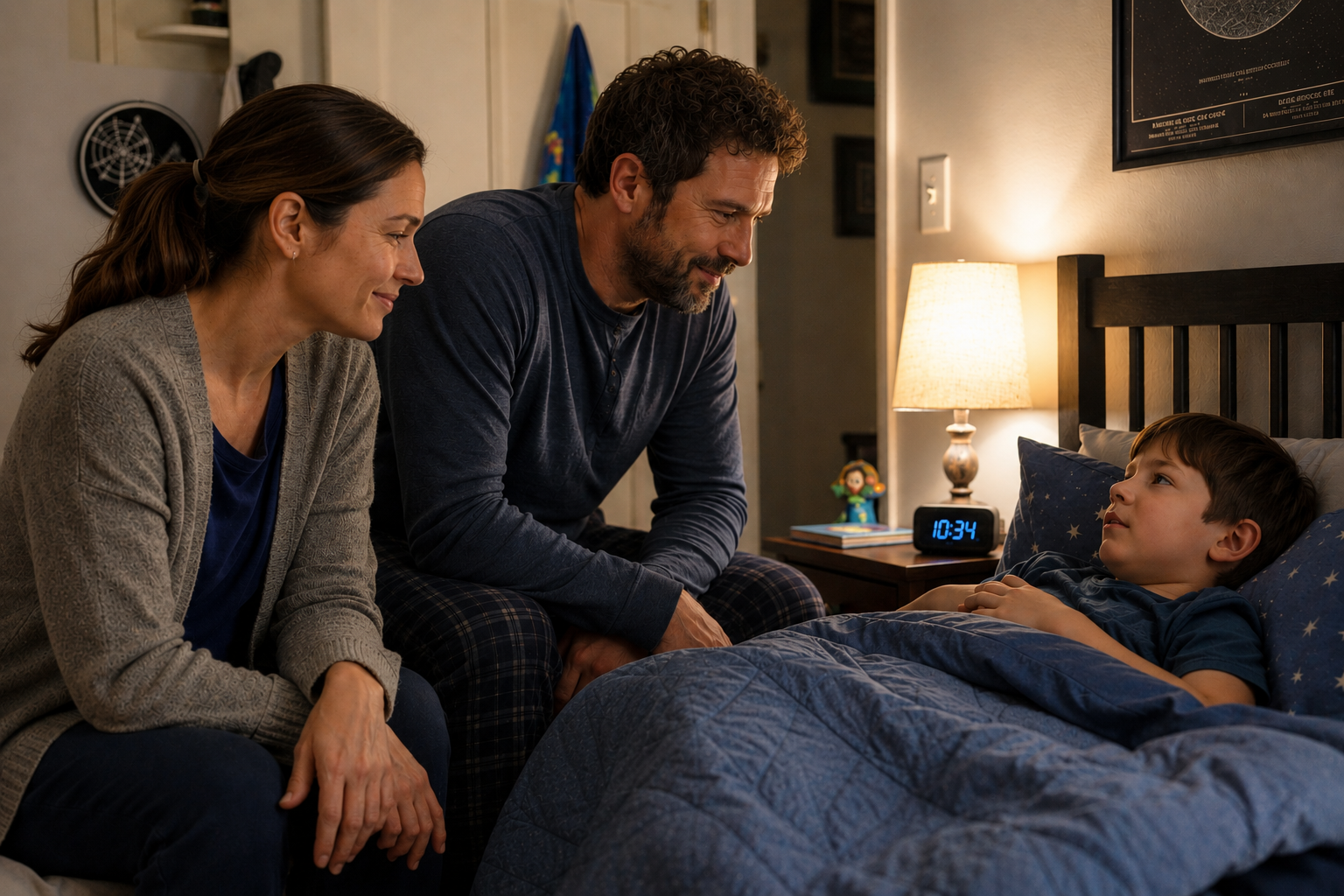
It’s 10:30 at night. Your child was sent to bed an hour ago. You can hear them moving around, their brain apparently as active as it was at noon. Tomorrow morning, getting them up for school will feel like pulling someone from a very deep place. By drop-off, you will both be running on empty.
If this is your household most nights, you are not doing bedtime wrong. You are living with one of the most consistent and least-discussed features of ADHD: sleep disruption that is biological in origin, not behavioural.
Sleep problems affect up to 70% of children with ADHD, compared with around 30% of neurotypical children (Cortese et al., 2009; Murdoch Children’s Research Institute, 2024). For adults, the figures are comparable. This is not coincidental. The same neurobiological systems that drive ADHD symptoms are also responsible for regulating sleep.
Why the ADHD brain struggles to switch off
The short answer is dopamine and the body clock, and the two are more connected than most people realise.
ADHD involves dysregulation of dopamine and norepinephrine pathways in the prefrontal cortex. These pathways do not only govern attention and impulse control. They also regulate the brain’s arousal state: the shift from alert and engaged to calm and ready for sleep. When these systems are dysregulated, that transition does not happen smoothly. The ADHD brain can stay stuck in hyperarousal, restless and alert, seeking stimulation at exactly the moment the body should be winding down (Becker, 2020).
There is also a circadian component. Research consistently shows that people with ADHD have a delayed circadian rhythm: their internal body clock runs later than the general population. Melatonin onset (the biological signal that tells the brain the night period has begun) occurs later in the evening in both children and adults with ADHD. This is not primarily a matter of screen use or poor sleep habits, though those factors compound it. It is a physiological difference (Bijlenga et al., 2019).
In practical terms, this means that asking a child with ADHD to fall asleep at 8:30pm may be asking their brain to do something it is not biologically ready to do.
What sleep disruption looks like in practice
Not every child with ADHD experiences this in the same way. The most common presentations are:
Sleep onset delay: the inability to fall asleep at a socially or academically appropriate time, even when physically tired. This is the most frequently reported problem across all ages, and reflects both the delayed circadian rhythm and the hyperarousal that keeps the ADHD brain engaged when it should be disengaging (Sleep Health Foundation Australia, 2024).
Restless sleep: frequent movement during the night, difficulty staying settled, sometimes linked to restless legs syndrome, which carries a higher prevalence in people with ADHD than in the general population (Cortese et al., 2009).
Sleep-disordered breathing: obstructive sleep apnoea and snoring affect a meaningful proportion of children with ADHD. Estimates suggest up to one-third in paediatric ADHD populations (Sedky, Bennett and Carvalho, 2014). This is worth ruling out, particularly in children who snore regularly. Treating sleep-disordered breathing can, in some cases, reduce the severity of ADHD-like symptoms.
Sleep inertia: the profound difficulty waking in the morning, often described as grogginess, confusion, or distress for 30 minutes or more after waking. This is not laziness. It reflects the same arousal dysregulation that made falling asleep difficult the night before.
Reduced total sleep time: partly a consequence of late onset, partly the result of early wake requirements for school that do not account for a delayed circadian phase. Australian data show that one in three children nationally has difficulty falling or staying asleep. Among those with ADHD, the figure is considerably higher (Murdoch Children’s Research Institute, 2024).
For parents managing this, the pattern is familiar: a child who cannot get to sleep, does not stay easily in sleep, and cannot wake. A school morning that starts with conflict before 8am.
The loop: how poor sleep makes ADHD harder
This is where the relationship becomes genuinely vicious. Sleep deprivation directly impairs the prefrontal cortex functions that are already compromised in ADHD: sustained attention, impulse regulation, emotional modulation, and working memory (Lycett et al., 2015). A child who is under-slept presents, to an outside observer, like a child with worse ADHD than they have. Their frustration threshold drops. Their capacity to shift between tasks falls further. A teacher may notice an escalation in classroom behaviour on a Monday after a disrupted weekend.
This raises a question worth asking at clinic: is what we are seeing a reflection of the ADHD itself, or chronic sleep debt compounding it?
The answer is often both. Which is why treating sleep is not incidental to ADHD management. It is part of the clinical picture.
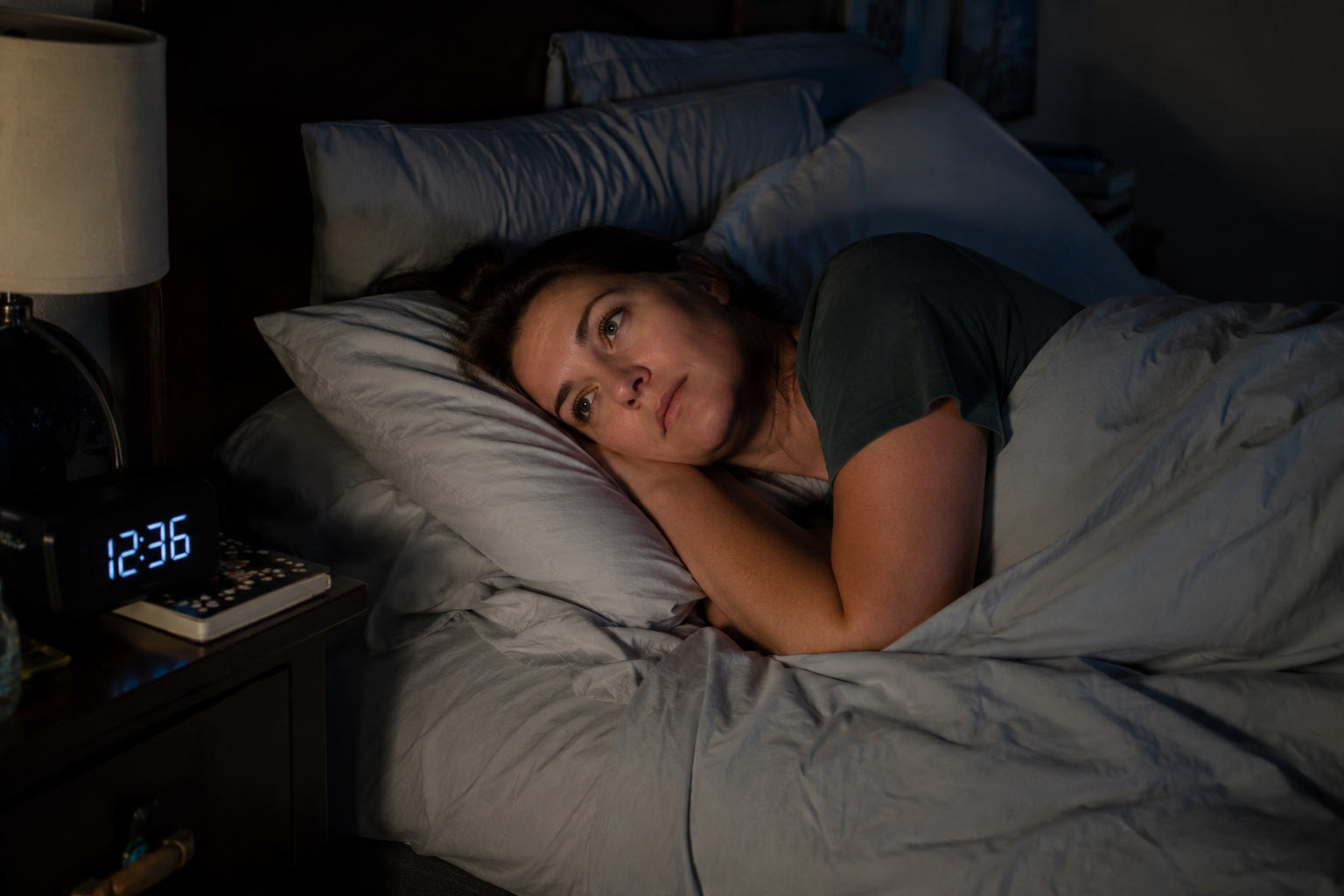
Sleep onset delay is the most common sleep complaint in children with ADHD, and one of the most treatable.
Medication and sleep: what to watch for
Stimulant medication adds a layer of complexity. The relationship is not straightforwardly negative, but it requires attention.
Stimulants taken too late in the day will delay sleep onset further. In Australian paediatric practice, the general guidance is that a second dose (where prescribed) should be taken no later than early afternoon for most children, though this varies with the individual and the formulation used (Efron, Lycett and Sciberras, 2014).
Some children also experience a rebound effect as stimulant medication wears off: a window of increased irritability, emotional dysregulation, and sometimes a temporary worsening of hyperactivity in the late afternoon and early evening, exactly when families are trying to manage dinner, homework, and wind-down. Small changes to formulation or timing can resolve sleep onset problems that have persisted for months. This is worth discussing explicitly with your child’s paediatrician rather than adjusting timing or dosing independently.
One practical point that is often overlooked: children on long-acting stimulant medication frequently have reduced appetite during the day and arrive at bedtime genuinely hungry. A small snack before bed (warm milk with a piece of wholegrain toast, for example) can address this without stimulating the brain further (Raising Children Network, 2024).
Not all stimulant use worsens sleep. Some children actually sleep more easily when their daytime dysregulation is better managed. The clinical picture varies considerably between individuals.
Melatonin: what the evidence shows
Melatonin is not a sedative. It does not force sleep. It is a chronobiotic: it signals to the brain that the night period has begun, helping to shift the body clock earlier. For children with ADHD whose circadian rhythm is genuinely delayed, it can be effective when used correctly.
A randomised controlled trial found that melatonin significantly advanced sleep onset and increased total sleep time in children with ADHD and chronic sleep onset insomnia, with no significant adverse effects over the study period (Van der Heijden et al., 2007).
In Australia, melatonin is available in both immediate-release and prolonged-release formulations. Timing matters more than most parents realise: immediate-release melatonin is generally given 30 to 60 minutes before the desired sleep onset time, not at actual bedtime as it is often used. Getting the timing right is the most common point of failure.
Melatonin is not appropriate for every child with ADHD-related sleep problems, and it is not a first-line standalone intervention. But for those with clear circadian delay (genuine inability to fall asleep before 10 or 11pm despite appropriate conditions) it has a reasonable evidence base and is commonly used in Australian paediatric practice. As with any medication, it should be used under medical guidance.
Sleep strategies adapted for the ADHD brain
Standard sleep hygiene advice is not wrong. It is just insufficient for the ADHD brain, and applying it without adjustment can produce parental guilt when the generic approach does not work.
The ADHD brain has particular difficulty with transitions. The shift from wakefulness to sleep is a transition, and it benefits from the same scaffolding that helps with other transitions during the day.
Wind-down needs structure, not just the absence of stimulation. Some children need a specific, predictable sequence (bath, dim lights, a familiar audiobook) rather than simply “no screens.” The ritual matters as much as its content. Starting this process 30 to 60 minutes before the target sleep time gives the brain adequate runway.
Bedtime fading is a practical strategy for children whose body clock runs genuinely late. Rather than forcing an earlier bedtime abruptly (which tends to produce resistance without sleep) the approach involves starting at the time the child naturally falls asleep and moving it earlier by around 15 minutes every few days. Keeping wake time consistent throughout is key (Raising Children Network, 2024).
Physical activity helps during the day, not the evening. Vigorous exercise late in the day can delay sleep onset further in children whose arousal systems are already slow to downregulate.
The “one more thing” trap is worth naming explicitly with older children and adolescents. The final 30 minutes before bed should be low-demand and predictable. Keeping that window consistent reduces resistance at the actual sleep point.
The evidence for structured behavioural interventions in this area is strong. Research from the Murdoch Children’s Research Institute has confirmed that even brief, structured sessions with parents, covering healthy sleep habits and behavioural strategies, produce meaningful improvement in sleep for children with ADHD. A subsequent randomised controlled trial demonstrated these benefits extend to parental mental health as well (Hiscock et al., 2015; Hiscock et al., 2019). Sleep is treatable. It is not simply something families have to absorb.
If you’re reading this and recognising your own nights
The adult with ADHD who lies awake replaying conversations, planning tomorrow, or simply unable to disengage from whatever they were last doing is experiencing the same arousal dysregulation as the child who cannot settle at bedtime. Research using actigraphy (wrist-worn movement monitors that objectively track sleep timing) has confirmed that adults with ADHD show measurably delayed sleep patterns compared to controls, independent of self-reported habits (Gamble et al., 2013).
If you have spent years thinking of yourself as a bad sleeper, a night owl, or someone who simply cannot switch off, it may be worth considering whether what you are describing is a feature of ADHD rather than a fixed personality trait. For many women, this connection becomes visible only after their child’s diagnosis prompts them to look back at their own history.
If this resonates, an ADHD assessment is a reasonable next step. You can get in touch with the Pandion team here.
For further reading on how ADHD affects adult energy and functioning beyond sleep, the connection to ADHD burnout is worth understanding. Chronic sleep debt and burnout are not separate problems. They feed each other.
When to bring it to clinic
Sleep problems in ADHD rarely resolve without some deliberate intervention. If your child’s sleep is affecting their school performance, your family’s functioning, or their emotional regulation during the day, it is a clinical issue, not a parenting problem to solve in isolation.
Sleep is reviewed as part of every ADHD assessment at Pandion, and at ongoing review appointments. If sleep has never been explicitly addressed in your child’s care, it is worth raising.
If you would like to discuss your child’s ADHD management (including sleep) our team is here to help.
Book an appointmentFrequently asked questions
References
- Becker, S.P. (2020). ‘ADHD and sleep: Recent advances and future directions’, Current Opinion in Psychology, 34, pp. 50–56. https://doi.org/10.1016/j.copsyc.2019.09.006
- Bijlenga, D., Vollebregt, M.A., Kooij, J.J.S. and Arns, M. (2019). ‘The role of the circadian system in the etiology and pathophysiology of ADHD: time to redefine ADHD?’, ADHD Attention Deficit and Hyperactivity Disorders, 11(1), pp. 5–19. https://pubmed.ncbi.nlm.nih.gov/30927228/
- Cortese, S., Faraone, S.V., Konofal, E. and Lecendreux, M. (2009). ‘Sleep in children with attention-deficit/hyperactivity disorder: meta-analysis of subjective and objective studies’, Journal of the American Academy of Child and Adolescent Psychiatry, 48(9), pp. 894–904. https://pubmed.ncbi.nlm.nih.gov/19625983/
- Efron, D., Lycett, K. and Sciberras, E. (2014). ‘Use of sleep medication in children with ADHD’, Sleep Medicine, 15(4), pp. 472–475. https://doi.org/10.1016/j.sleep.2013.10.018
- Gamble, K.L., May, R.S., Besing, R.C., Tankersly, A.P. and Fargason, R.E. (2013). ‘Delayed sleep timing and symptoms in adults with attention-deficit/hyperactivity disorder: a controlled actigraphy study’, Chronobiology International, 30(4), pp. 598–606. https://pubmed.ncbi.nlm.nih.gov/23445512/
- Hiscock, H., Sciberras, E., Mensah, F., Gerner, B., Efron, D., Khano, S. and Oberklaid, F. (2015). ‘Impact of a behavioural sleep intervention on symptoms and sleep in children with attention deficit hyperactivity disorder, and parental mental health: randomised controlled trial’, BMJ, 350, h68. https://pubmed.ncbi.nlm.nih.gov/25646809/
- Hiscock, H., Mulraney, M., Heussler, H., Rinehart, N., Schuster, T., Grobler, A.C., Gold, L., Bohingamu Mudiyanselage, S., Hayes, N. and Sciberras, E. (2019). ‘Impact of a behavioral intervention, delivered by pediatricians or psychologists, on sleep problems in children with ADHD: a cluster-randomized, translational trial’, Journal of Child Psychology and Psychiatry, 60, pp. 1230–1241. https://doi.org/10.1111/jcpp.13083
- Lycett, K., Sciberras, E., Mensah, F. and Hiscock, H. (2015). ‘Behavioral sleep problems and internalizing and externalizing comorbidities in children with attention-deficit/hyperactivity disorder’, European Child and Adolescent Psychiatry, 24(1), pp. 31–40. https://doi.org/10.1007/s00787-014-0530-2
- Sedky, K., Bennett, D.S. and Carvalho, K.S. (2014). ‘Attention deficit hyperactivity disorder and sleep disordered breathing in pediatric populations: a meta-analysis’, Sleep Medicine Reviews, 18(4), pp. 349–356. https://pubmed.ncbi.nlm.nih.gov/24581717/
- Van der Heijden, K.B., Smits, M.G., Van Someren, E.J., Ridderinkhof, K.R. and Gunning, W.B. (2007). ‘Effect of melatonin on sleep, behavior, and cognition in ADHD and chronic sleep-onset insomnia’, Journal of the American Academy of Child and Adolescent Psychiatry, 46(2), pp. 233–241. https://pubmed.ncbi.nlm.nih.gov/17242627/
- Murdoch Children’s Research Institute (2024). Sleep. https://www.mcri.edu.au/impact/a-z-child-adolescent-health/s/sleep
- Raising Children Network (2024). How to help your child with ADHD sleep better. https://raisingchildren.net.au/adhd/social-emotional-wellbeing/adhd-wellbeing/better-sleep-children-teens-adhd
- Sleep Health Foundation Australia (2024). ADHD and sleep in children. https://www.sleephealthfoundation.org.au/sleep-topics/adhd-and-sleep-in-children