

Last updated: October 2026
Clinically reviewed by Dr Brendan Daugherty, BMed, MPM, FRANZCP, October 2026
Key Takeaways
- Screens do not cause ADHD. Once shared genetic liability is accounted for, the link between screen time and attention problems is largely explained by genetics rather than by the screens.
- Children wired for ADHD are drawn to screens, so heavy use can be an early sign of the condition rather than its cause.
- Late-night device use is the clearest harm. Short sleep produces inattention that looks a great deal like ADHD and is not.
- A proper assessment is built to tell those apart, which is why no screening questionnaire can deliver a diagnosis on its own.
It is a quarter past seven, you have asked for the third time for the tablet to go down, and the negotiation that follows is louder than it should be. Later, once the house is quiet, a different thought arrives: did I do this?
The headlines have been getting louder on exactly this point. Screens, the argument goes, are producing a generation of children who look like they have ADHD but do not really have it. Induced ADHD. Attention broken by design rather than by biology.
It is a fair thing to wonder about, and it deserves a proper answer rather than a reassuring one.
ADHD is not something a device does to a child
ADHD is a neurodevelopmental condition with a complicated and largely inherited biology. It is one of the most heritable neurodevelopmental disorders, and the most common of them in childhood: Australian estimates put it at 6 to 10% of children and adolescents, and international estimates at 2 to 6% of adults, though Australia has no current adult prevalence study using modern diagnostic criteria. Twin and molecular genetic studies point to many genes of small effect acting together on brain development, with environment interacting with that liability rather than creating it from nothing (AADPA, 2022).
Nothing in that picture leaves room for a single exposure, arriving at age four with a tablet, to manufacture the condition.
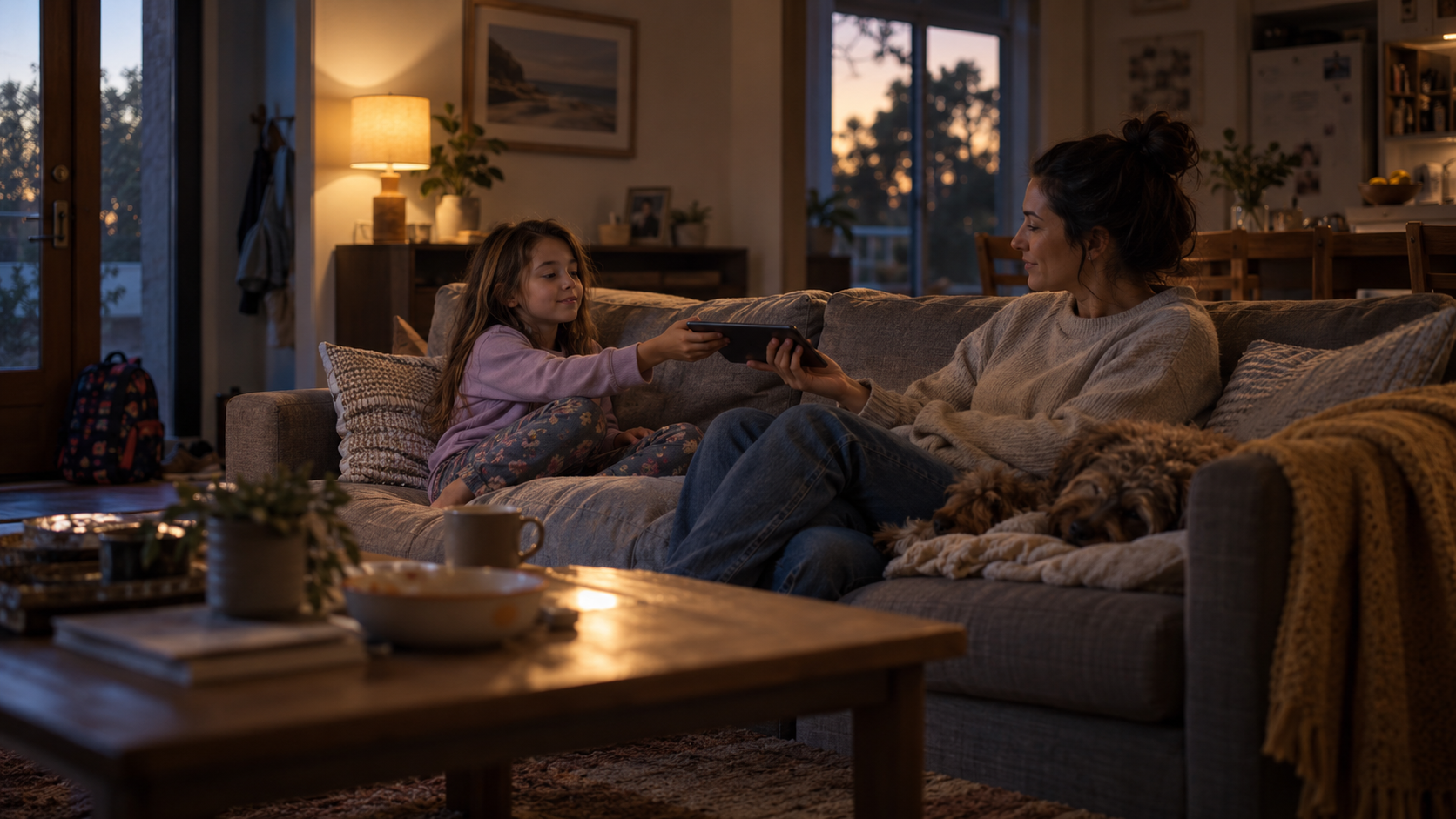
The end of screen time is a routine, not a confiscation.
Why the screen studies look more alarming than they are
Plenty of research does find that children who use screens more have more attention problems. The question is what produces that, and the last few years have changed the answer.
A study of more than 4,000 children aged nine to eleven measured screen use, attention problems and genetic risk together. Screen time was associated with attention problems, as expected. Once shared genetic liability was accounted for, that association was fully explained by genetics rather than by the screens (Zhang et al., 2023). A systematic review of longitudinal studies found associations that were consistently small and mostly reciprocal (Thorell et al., 2022). Even the 2026 US Surgeon General’s advisory, a document arguing hard for screen reduction, concedes that the causal direction here remains unclear (Office of the Surgeon General, 2026).
Children wired for ADHD are drawn to screens, because screens deliver exactly the fast, frequent, low-effort reward an ADHD brain seeks out. The screen use can be the first visible sign of the condition rather than the cause of it.
What screens do change
None of that makes screen time harmless, and two effects matter clinically.
Sleep. Late device use delays sleep onset through light exposure, cognitive arousal and simple displacement of bedtime. Chronic short sleep in a child produces inattention, irritability, poor emotional regulation and reduced working memory (Stiglic and Viner, 2019). That is to say it produces something that looks a great deal like ADHD and is not. In clinic, disrupted sleep is one of the most common alternative explanations for attention difficulties, and it has to be addressed before anyone can see the underlying picture.
Attention regulation. Content that changes every three seconds trains an expectation of constant novelty, and a child used to that will find fifteen minutes on long division genuinely harder to sit through. That is a real effect. It is not the same as acquiring a neurodevelopmental condition, and it is largely reversible once the input changes.
The content matters more than the hours
An infinite feed of nine-second videos and a video call with a grandparent interstate are not the same activity, and the number on your parental controls dashboard cannot tell them apart.
| Type of use | What it looks like | What the evidence suggests |
|---|---|---|
| Passive short-form feeds | Endless scrolling, autoplay, nine-second videos | Linked with poorer sustained attention. The format trains an expectation of constant novelty |
| Late-night use, any kind | Devices in the bedroom, screens in the hour before sleep | The clearest harm. Delayed sleep onset, and short sleep produces inattention that mimics ADHD |
| Interactive and problem-solving | Puzzle and building games, anything needing planning across several steps | Supports executive skills and fine motor control |
| Narrative and educational | Films and shows with a story to follow, documentaries, reading apps | Supports language and comprehension, particularly when watched with an adult |
| Social connection | Video calls with family, messaging friends, interest-based communities | Matters for adolescents who struggle socially in person, and is often the main benefit for neurodivergent teenagers |
The open internet is a different proposition again. It is engineered to hold attention rather than to teach, and it reflects a child’s interests back at them, amplified and unmoderated. Without guardrails, that is where the harm sits. Not in the device.
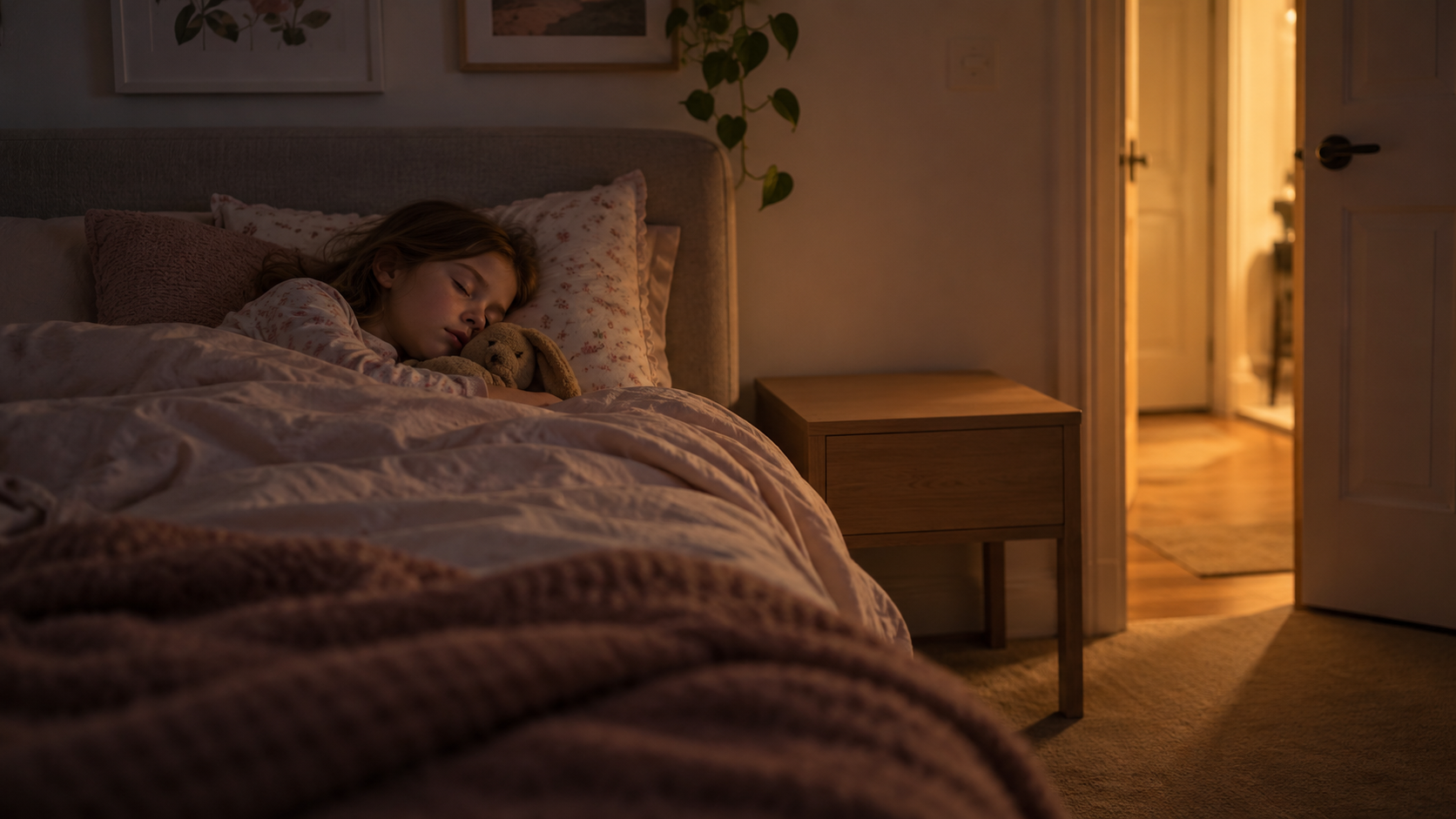
Devices out of the bedroom overnight is the single rule worth enforcing above all others.
The overdiagnosis question deserves an honest answer
The strongest argument against clinics like ours is not about screens at all. It is that diagnosis rates have climbed faster than the condition plausibly could have, and there is Australian evidence on the point. An analysis of two birth cohorts from the Longitudinal Study of Australian Children found ADHD diagnoses rising across the two groups while measured hyperactive and inattentive behaviours stayed flat, with about a quarter of diagnosed children scoring in the normal range (Kazda et al., 2023).
I am not going to wave that away. But it is an argument for better assessment, not fewer assessments, and it cuts both ways: the same imprecision that produces a diagnosis in a child who does not have ADHD also produces a missed diagnosis in the girl who has been quietly inattentive since Year 2 and was never disruptive enough to be noticed.
What separates those outcomes is the assessment, which is where the “it’s just screens” argument collapses. A proper assessment is built to answer exactly that question. It requires symptoms present for at least six months and out of keeping with the child’s developmental stage, onset before age twelve, impairment in two or more settings, and no better explanation (AADPA, 2022). Sleep deprivation is on that list. So are anxiety, trauma, hearing and vision problems, and learning disorders. An assessment that does not exclude those is incomplete.
This is also why a questionnaire cannot deliver a diagnosis. A meta-analysis of ADHD screening tools in children and adolescents found that none reached acceptable sensitivity and specificity on their own (Mulraney et al., 2022). Screeners open the conversation. Developmental history, information from school and home, and a clinician’s judgement are what move it towards an answer.
What actually helps at home
Nothing here requires throwing the devices in the bin.
Make sleep the non-negotiable. Devices out of bedrooms overnight, off for the hour before bed. If you enforce one rule, enforce this one. The Australian 24-Hour Movement Guidelines set useful defaults on total use: none under two years, up to an hour a day of quality content from two to five, and no more than two hours of recreational screen time from five to seventeen (Department of Health, 2021). Treat them as a reference point rather than a verdict on your parenting, since very few Australian families meet them.
Use the controls, but do not expect them to parent. Apple’s Screen Time and Google’s Family Link both handle app limits, downtime windows and content restrictions, and the eSafety Commissioner publishes guides for both. They are scaffolding for a family agreement, not a substitute for one.
Watch what you model. Parental device use that interrupts interaction with a child has been linked with reduced responsiveness and more attention-seeking behaviour in the child (McDaniel and Radesky, 2018). I see it in waiting rooms most weeks: a parent and child side by side, each on a separate screen. It is not a moral failing and I have done it myself, but children calibrate to what is normal in their house. The simplest version of this, and the easiest to hold, is no screens at the table: not the children’s, not yours.
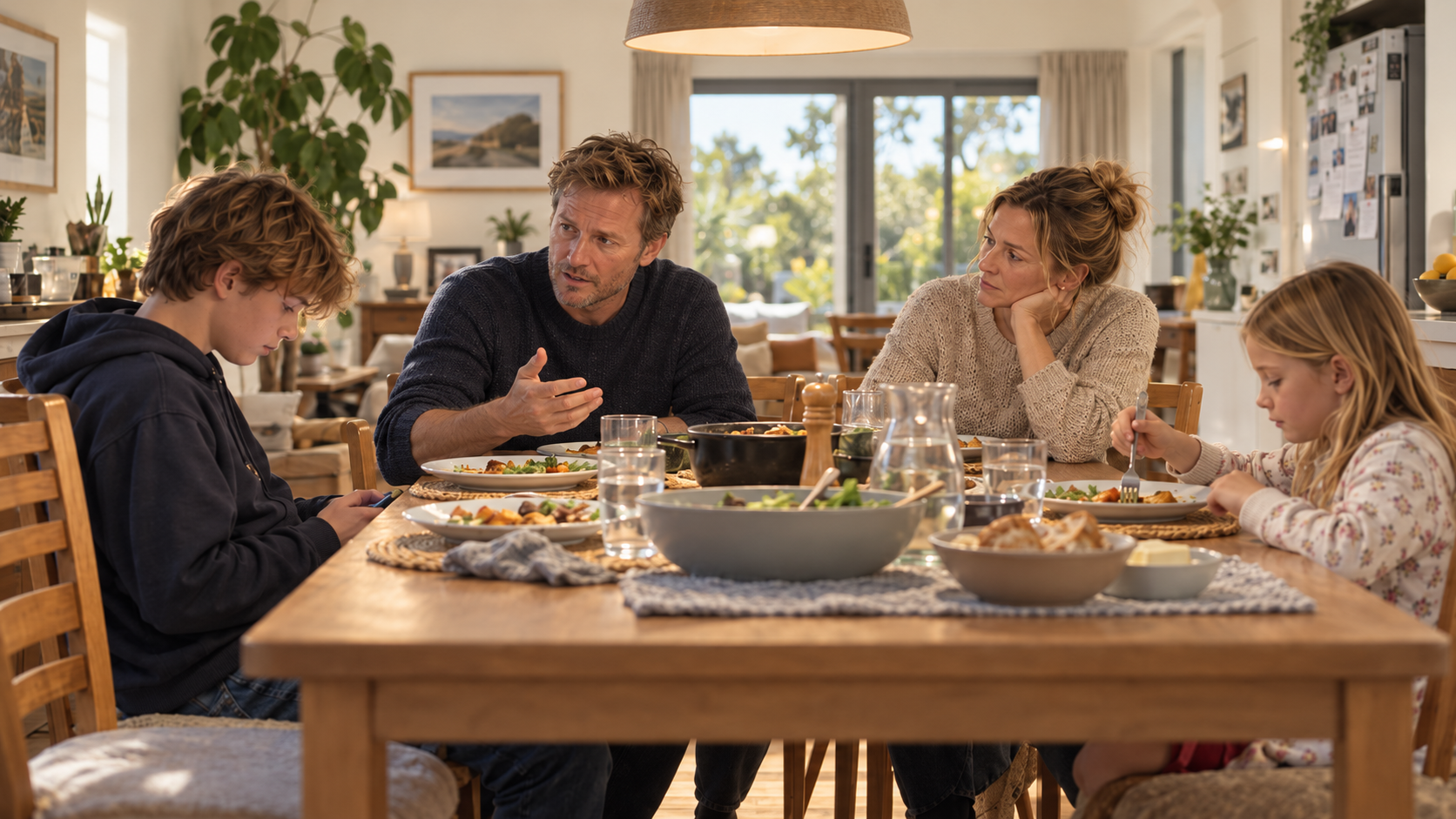
No screens at the table is the rule children notice their parents keeping.
Norms do move, and faster than people expect. Within living memory people smoked in offices, in pubs and over dinner in restaurants, and nobody thought it strange. Several of the tech executives who built these platforms have said in interviews that they limited their own children’s access to them.
Australia’s under-16 social media rules commenced in December 2025 and shift the default, which matters (eSafety Commissioner, 2026). They will not solve this for you: age assurance is imperfect, and gaming, messaging and the open web sit outside the scope entirely.
If you are reading this about yourself
Some parents get three paragraphs into an article like this one and recognise their own attention rather than their child’s.
The same reasoning applies. Heavy screen use, poor sleep and a fragmented working day will degrade anyone’s concentration, and none of that adds up to a condition acquired in adulthood. The difference is the timeline. ADHD in an adult has been there since childhood and was missed, most often in women whose inattentive presentation was read as anxiety or as not applying themselves.
When to bring this to clinic
Cut the screens back for four to six weeks, with the bedtime and mealtime rules properly enforced, and see what changes. It is a sensible move in its own right, and it is diagnostically useful.
If the difficulties lift, you have your answer. If your child is still struggling to start and finish ordinary tasks, still losing things, still dysregulated at home and at school, and the pattern stretches back well before the tablet arrived, then screens are not what you are dealing with and further restriction will not fix it. That is the point at which an ADHD assessment is worth having, not because a diagnosis is the goal, but because the question deserves a better answer than a headline or a screen time app can give you.
Frequently asked questions
References
- Australasian ADHD Professionals Association (2022). Australian Evidence-Based Clinical Practice Guideline for Attention Deficit Hyperactivity Disorder (ADHD). NHMRC-approved.
- Australasian ADHD Professionals Association (2022). ADHD Guideline, Background: About ADHD.
- Department of Health (2021). Australian 24-Hour Movement Guidelines. Australian Government.
- eSafety Commissioner (2026). Social Media Age Restrictions. Australian Government.
- Kazda, L., et al. (2023). Increased diagnosis of attention-deficit hyperactivity disorder despite stable hyperactive/inattentive behaviours: evidence from two birth cohorts of Australian children. Journal of Child Psychology and Psychiatry.
- McDaniel, B.T. and Radesky, J.S. (2018). Technoference: longitudinal associations between parent technology use, parenting stress, and child behavior problems. Pediatric Research.
- Mulraney, M., et al. (2022). Systematic review and meta-analysis: screening tools for attention-deficit/hyperactivity disorder in children and adolescents. Journal of the American Academy of Child and Adolescent Psychiatry.
- Office of the Surgeon General (2026). Surgeon General’s Warning on the Harms of Screen Use. US Department of Health and Human Services.
- Stiglic, N. and Viner, R.M. (2019). Effects of screentime on the health and wellbeing of children and adolescents: a systematic review of reviews. BMJ Open, 9: e023191.
- Thorell, L.B., et al. (2022). Longitudinal associations between digital media use and ADHD symptoms in children and adolescents: a systematic literature review. European Child and Adolescent Psychiatry.
- Zhang, Y., Choi, K.W., Tiemeier, H., et al. (2023). Shared genetic risk in the association of screen time with psychiatric problems in children. JAMA Network Open, 6(11).
The information in this article is general in nature and provided for education. It cannot take account of your individual circumstances and is not a substitute for advice from your treating clinician. Decisions about starting, changing or stopping any medication should be made with your prescriber. If you have an urgent concern about your health or your child’s health, contact your GP or call 000.