

Last updated: August 2026
Key Takeaways
- Stimulants (methylphenidate, dexamfetamine, lisdexamfetamine) are the recommended first-line treatment for ADHD in Australia. Around 70% of people respond well to each class, and between 90 and 95% respond to one class, the other, or both.
- Non-stimulants (atomoxetine, guanfacine) are effective alternatives when a stimulant is not suitable, not tolerated, or not wanted.
- Finding the right medication and dose takes months rather than one appointment. Titration is how ADHD medication is prescribed properly.
- Side effects are common early, mostly manageable, and usually respond to a change of dose, timing or formulation.
- Regular monitoring of height, weight, heart rate, blood pressure, sleep and mood is a standard part of treatment, not a sign that something is wrong.

You have the prescription. What you probably do not have is a clear sense of what the next few months look like: when it should start working, what is worth mentioning to the prescriber, and what will settle on its own. That is true whether the medication is for you or for your child.
The four medicines used for ADHD in Australia
Four medicines are licensed to treat ADHD in Australia: two classes of stimulant, and two non-stimulants. Between them they cover most presentations, age groups and preferences.
Methylphenidate (Ritalin, Ritalin LA, Concerta) is the first stimulant class. Immediate-release methylphenidate works for around four hours. Modified-release preparations extend that to eight to twelve hours, which removes the need for a dose during the school or work day.
The amphetamines are the second stimulant class, and in Australia this means dexamfetamine and lisdexamfetamine (Vyvanse). Dexamfetamine is short-acting. Lisdexamfetamine is a prodrug, converted to active dexamfetamine in red blood cells, and that conversion gives it a smoother onset and a longer, steadier effect lasting ten to thirteen hours.
Atomoxetine (Strattera) is the first non-stimulant. It blocks the reuptake of noradrenaline rather than raising dopamine and noradrenaline together the way stimulants do. Its effects build over four to twelve weeks and then cover the whole day, which suits people who find the arrival and departure of a stimulant dose unsettling, and it is often preferred where anxiety or tics sit alongside ADHD.
Guanfacine extended-release (Intuniv) is the second, and it works differently again, acting on receptors in the prefrontal cortex to improve attention and reduce impulsivity. It is the only genuinely 24-hour ADHD medication available here (AADPA, 2024). It is licensed for children and adolescents, and prescribed off-label for adults.
| Medicine | Class | How long it lasts |
|---|---|---|
| methylphenidate (Ritalin, Ritalin LA, Concerta) | Stimulant | Around 4 hours immediate-release, 8 to 12 hours modified-release |
| dexamfetamine | Stimulant | Short-acting |
| lisdexamfetamine (Vyvanse) | Stimulant | 10 to 13 hours |
| atomoxetine (Strattera) | Non-stimulant | Covers the full day |
| guanfacine extended-release (Intuniv) | Non-stimulant | 24 hours |
The Australian guideline does not favour one stimulant class over the other as a starting point. That decision sits with you and your prescriber (AADPA, 2022; AADPA, 2024). Most ADHD medications are listed on the Pharmaceutical Benefits Scheme and subsidised where eligibility criteria are met. Your prescriber or pharmacist can confirm what applies to your prescription.
What stimulants actually do
Stimulants increase the amount of dopamine and noradrenaline available in the prefrontal cortex, the part of the brain that handles attention, impulse control, working memory and emotional regulation. In ADHD, signalling in that region is less efficient than it needs to be. Both methylphenidate and the amphetamines block the transporters that clear those neurotransmitters from the synapse. The amphetamines go one step further and prompt neurons to release more dopamine, which is why two medicines with a similar primary mechanism can produce noticeably different results in the same person (AADPA, 2024).
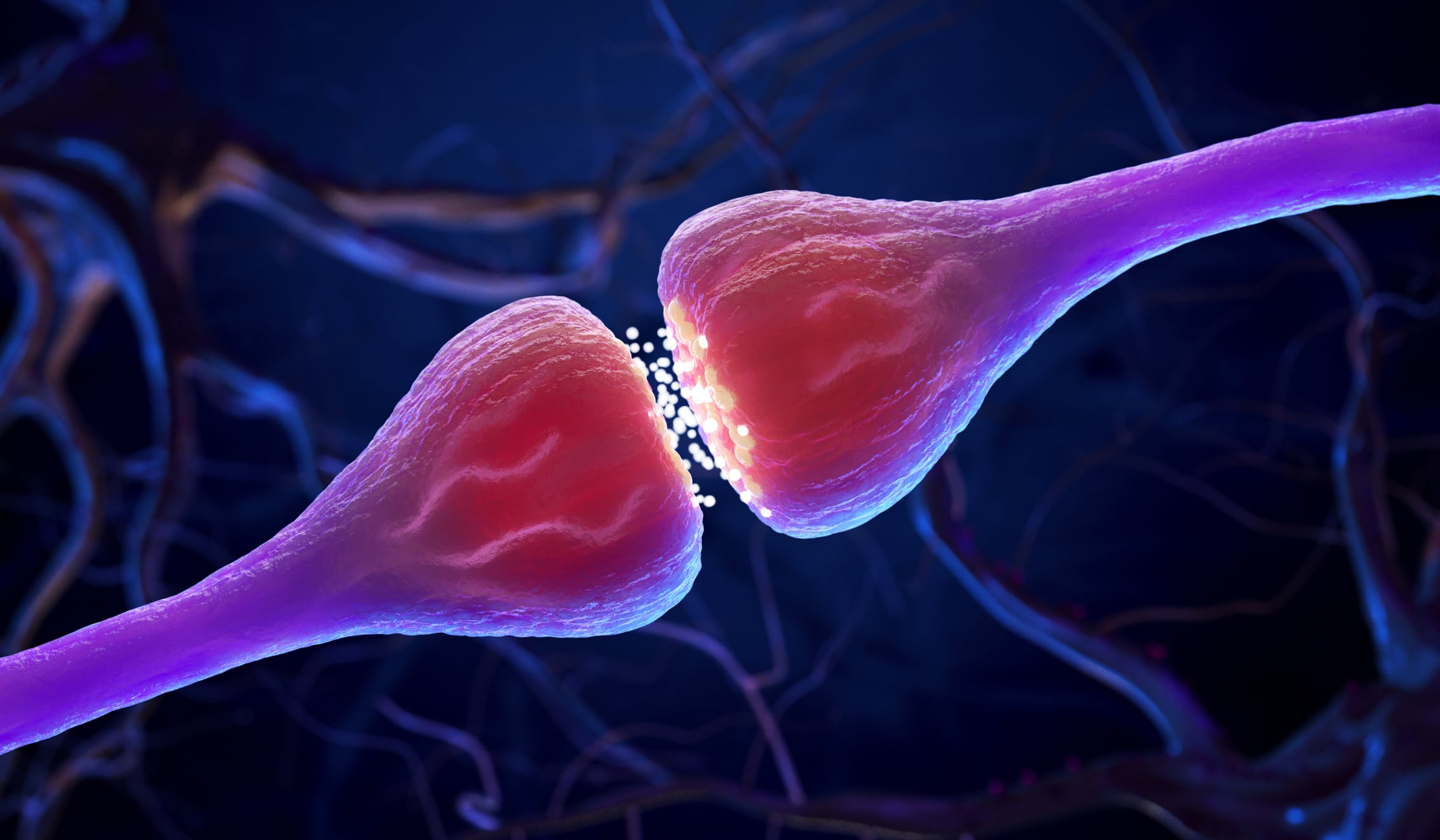
Stimulants act at the synapse, where one nerve cell passes a signal to the next.
What that feels like, when the dose is right, is not sedation and not artificial calm. Most people describe thinking more clearly, being pulled off-task less often, and finding it easier to start the things they already wanted to do. Some notice very little themselves and only see the change in their output, or in what other people say to them. Both are ordinary responses.
Two things are worth being plain about. Stimulants do not teach skills, and they do not work for 24 hours (AADPA, 2024). Strategies, support and adjustments at school or work still matter. And there is a particular risk for adults in the first months: when things suddenly feel easier, it is easy to forget that everyone has a finite amount of energy, and some people run themselves into the ground before they notice (AADPA, 2024).
When a non-stimulant is the better starting point
A non-stimulant is the right first choice in four situations: when stimulants are medically contraindicated, when they have been tried and not tolerated, when symptoms have not responded to adequate trials of both stimulant classes, or when you make an informed decision not to take one (AADPA, 2022).
They are not a lesser option, and for some people they are the better long-term fit.
Atomoxetine builds slowly. Mild nausea and some drowsiness are common in the early weeks and usually settle. Meaningful benefit can take up to twelve weeks, so it needs realistic expectations from the start rather than a judgement at week three.
Guanfacine takes several weeks to show its effect too, and adverse effects often arrive before the benefit does, most commonly drowsiness and signs of low blood pressure (AADPA, 2024). It is frequently used alongside a stimulant rather than instead of one, particularly where symptoms bite in the early morning or the evening. It lowers blood pressure and heart rate, and it must be reduced gradually rather than stopped suddenly.
If neither works
For adults who have tried stimulants and both non-stimulants without enough benefit, the Australian guideline lists further options: bupropion, clonidine, modafinil, reboxetine and venlafaxine, with a second group considered on clinical experience rather than trial evidence (AADPA, 2022). Of these, bupropion has the strongest evidence in adults (Verbeeck et al., 2017).
The guideline is direct about the limits here. Evidence for these medicines in ADHD is limited, and for some of them any benefit may relate more to mood than to core ADHD symptoms (AADPA, 2024). If one comes up in conversation with your prescriber, it reflects a considered decision at the end of a long process, not a sign that something has gone wrong.
Why the right dose takes months to find
Finding the right medication and the right dose usually takes several months, because there is no test that can predict either one. Response varies between people and does not track with age, weight, sex or other baseline characteristics (AADPA, 2024). The only reliable method is to start low, measure the response with standardised rating scales, and increase gradually until symptoms are controlled at a dose that is comfortable to take.
Around 70% of people respond well to each stimulant class, and between 90 and 95% respond well to one, the other, or both (AADPA, 2024). If the first medicine does not work, that is not a failed attempt. It narrows the field, and there is a good chance the other class will suit.
Follow-up is frequent during titration. Once the dose is stable, reviews move to roughly six-monthly.
The side effects that show up first
Reduced appetite, disturbed sleep and an irritable hour or two in the early evening are the effects people notice first. Most are manageable, most improve, and most respond to a change of dose, timing or formulation rather than stopping treatment.
Appetite suppression is the most common, and it bites hardest at lunchtime when the medicine is at peak effect. Taking the dose with or after food rather than before, making breakfast the main meal, adding high-calorie foods of good nutritional value, and offering snacks early in the morning or later in the evening once the effect has worn off all help (AADPA, 2022).
Sleep difficulties often come down to timing, particularly with modified-release preparations taken late. Adjusting the timing resolves it for many people. Melatonin is sometimes used to help with sleep onset, and that is a conversation to have with your prescriber rather than something to try independently. If sleep was difficult before medication started, and for a great many people with ADHD it was, our post on ADHD and sleep covers that in more depth.
End-of-dose irritability, sometimes called rebound, can appear as a stimulant wears off in the late afternoon: a short, sharp dip in patience at what is often the least convenient hour of the day. In children it tends to show as tearfulness or a burst of restlessness after school. This is usually a timing or formulation issue rather than the medicine itself, and it often responds to a longer-acting preparation or a change to the schedule.
Cardiovascular effects are modest. Stimulants can raise heart rate and blood pressure slightly, which is why both are checked before and after every dose change and at least every six months (AADPA, 2022).
Mood changes, including increased anxiety or irritability, occur for some people early in treatment or at higher doses. Raise it before concluding that medication is not for you. A dose or formulation change often settles it.
Less commonly, stimulants can worsen tics or, at higher doses, trigger anxiety, paranoia or perceptual disturbances. If new repetitive movements or vocal sounds appear, or if thinking becomes frightening or unfamiliar, contact your prescriber promptly rather than waiting for the next scheduled review.
Generic and brand versions of the same medicine contain the same active ingredient. For immediate-release tablets they can generally be used interchangeably. For modified-release stimulants the release mechanism differs between products, so a change of brand can change how the medicine is felt across the day.
If your pharmacy substitutes a different brand and something feels different, that is worth raising rather than ignoring.
What happens at a medication review
A review checks four things: whether the medicine is still working, whether side effects are tolerable, what your body is doing, and whether anything has changed around you. For most people on a stable dose this happens about every six months.
Height is measured every six months in children and adolescents, and weight at three and six months after starting and at least six-monthly after that, both plotted on a growth chart. Adults have their weight monitored (AADPA, 2022). Heart rate and blood pressure are compared against the normal range for age, before and after each dose change and every six months.
Sleep, mood, anxiety and tics are reviewed as well. These are common in ADHD with or without medication, and asking about them regularly is what separates a pre-existing pattern from a treatment effect.
Standardised rating scales, completed by you, or by parents and teachers for a child, track symptoms over time. This is what allows a prescriber to see that a dose needs adjusting rather than relying on impressions from a single appointment (AADPA, 2022).

Making breakfast the main meal is one of the simplest ways to manage reduced appetite.
The growth question
This section applies to children and adolescents. Adults have weight monitored, but not height.
Height and weight are measured at every review because stimulants commonly slow height velocity, by roughly one centimetre a year over the first three years of treatment, along with some transient weight loss (AADPA, 2024). It is the concern parents raise most often, and it is tracked deliberately rather than watched for.
If a child’s growth rate in height falls away significantly, there are several options: a planned break in treatment over school holidays to allow catch-up growth, a change to a different medication, or reducing the stimulant dose and adding guanfacine to the lower dose. Non-medication causes of slowed growth should be considered too, because medication is not the only explanation (AADPA, 2022; AADPA, 2024).
Some authorities have suggested that consistent stimulant use in childhood can delay puberty and the peak growth spurt, though this is not a universal finding (AADPA, 2024). What that disagreement means in practice is straightforward: measure, plot, and act if the line changes.
Planned breaks, and when they help
The general recommendation is to take ADHD medication every day and across the whole year, not only on school days or during term (AADPA, 2024). ADHD affects home, friendships and family life, not only classrooms and offices, and medication improves functioning across all of those.
There are exceptions. Where the main difficulty is concentration for demanding cognitive work, taking medication only on school or work days can be reasonable. And for children, where appetite, weight or growth is affected and dietary changes have not helped, a planned break is a recognised option, which is the situation described in the previous section.
Because stimulants clear the body within hours, a day without one gives a clear read on how much it is contributing. That is useful information. Whether a break helps at all is highly individual, and it is a conversation to have with your prescriber rather than a decision to make alone, particularly if ADHD affects your driving, your work or your relationships (NICE, 2019). Non-stimulants need more planning: atomoxetine stays active for weeks after stopping, and guanfacine must be tapered.
Deciding when to stop
Medication continues for as long as it is helping, and for many people that extends well into adulthood. An annual conversation about whether it is still needed is standard practice, and measurement-based care makes that judgement clearer than going on impressions (AADPA, 2024).
With stimulants, a planned period off medication usually answers the question. If core symptoms return, restarting is straightforward. Non-stimulants need more planning given how long they take to leave and to rebuild. The decision belongs to you and your prescriber together, and the circumstances that made medication right can change in either direction over time.
If you are recognising yourself in this
Some of you reading this for your child will have been recognising yourself for several sections now. That happens often, and it is worth saying plainly rather than leaving you to wonder.
There is something else worth knowing if you do go on to start medication yourself. People frequently become sharply self-aware in the early weeks, conscious of their ADHD traits and of mistakes they can now see clearly in hindsight. It can be confronting, and it can leave people feeling flat or anxious at precisely the point they expected relief. In adults it can trigger something closer to grief (AADPA, 2024). Knowing that in advance takes some of its power away, and it is worth telling whoever is prescribing for you if it happens.
If you want to know what assessment involves for an adult, our post on adult ADHD diagnosis in Australia sets out the process.
When to bring this to clinic
Most of what comes up in the first few months can be sorted with a small adjustment, provided someone hears about it. Raising something early is easier than living with it.
Bring it to clinic if:
- the medicine seems to wear off well before the end of the day
- appetite loss is affecting growth, weight or energy
- sleep has become worse since starting
- mood or anxiety has changed, particularly if it is new or getting worse
- your child has developed new repetitive movements or vocal sounds
- you are not sure whether the current dose is still doing anything
If you have not been assessed yet and you have found your way here while working out whether to pursue it, that conversation is what an assessment appointment is for. Nobody expects you to leave with a prescription. The aim is that you leave understanding enough to decide.
Pandion Health provides specialist ADHD assessment and medication management for children, adolescents and adults across Australia.
Book an assessmentFrequently asked questions
References
- Australasian ADHD Professionals Association (2024). ADHD Prescribing Guide for Australian Healthcare Professionals, 1st Edition. Melbourne: AADPA.
- ADHD Guideline Development Group (2022). Australian Evidence-Based Clinical Practice Guideline for Attention Deficit Hyperactivity Disorder (ADHD). Melbourne: Australasian ADHD Professionals Association.
- Verbeeck, W., Bekkering, G.E., Van den Noortgate, W. and Kramers, C. (2017). Bupropion for attention deficit hyperactivity disorder (ADHD) in adults. Cochrane Database of Systematic Reviews, 10(10), CD009504.
- National Institute for Health and Care Excellence (2019). Attention deficit hyperactivity disorder: diagnosis and management (NG87). London: NICE.
The information in this article is general in nature and provided for education. It cannot take account of your individual circumstances and is not a substitute for advice from your treating clinician. Decisions about starting, changing or stopping any medication should be made with your prescriber. If you have an urgent concern about your health or your child’s health, contact your GP or call 000.