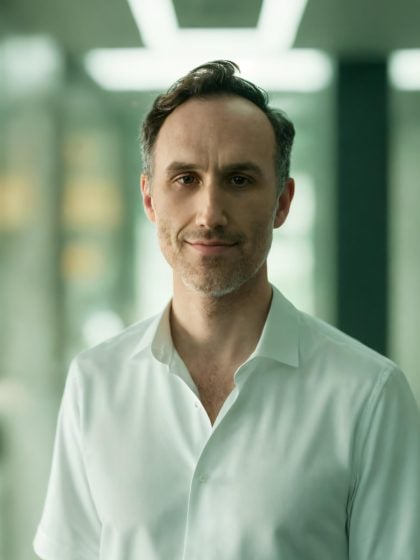
Dr James J Mulvany
General Paediatrician
- ADHD assessment & treatment
- Autism spectrum disorder
- Developmental concerns
- Learning and intellectual difficulties
- School refusal
- Anxiety & mood problems
MBBChBAO, MRCPCH, FRACP. Member, Australian ADHD Professionals Association (AADPA)
ADHD and neurodevelopmental paediatrics
James is a co-founder of Pandion Health and assesses ADHD, autism and neurodevelopmental presentations in children and young people up to 16 years of age. He works with families rather than around them, and much of his practice involves parents who have spent a long time being told that what they are seeing is a behaviour problem.
ADHD is rarely the whole picture. Anxiety, autism, learning difficulties, sleep disturbance and trauma either sit alongside it or account for the symptoms outright, and separating them is the substance of the assessment. At Pandion these are screened as standard rather than treated as an optional extra, and where ADHD is not the right answer the family is told so clearly, with an explanation of what comes next.
He also works with GPs on ongoing care after diagnosis, including co-prescribing and handback arrangements in line with the regulations that apply in each state and territory. Referring clinicians can read more on the shared care and referral page.
How he approaches ADHD
James’s starting position is that the diagnosis is not the point. “You’re not aiming to treat individual symptoms,” he has said. “You’re aiming to treat and support the functional impairment.” If a child is struggling in the classroom, the goal is that they can engage with it and build peer relationships, and treatment is judged against that rather than against a symptom checklist.
Not every child referred to him with a query about ADHD receives a diagnosis. He is direct about why the judgement is difficult: there is no blood test and no biomarker, so an assessment rests on the history and on whether the impairment is genuinely there.
He is equally direct that ADHD is not a parenting problem, and that a child is not choosing the difficulty they are having. Most of the children he sees do not want to feel the way they do.
Where a diagnosis is made, medication is discussed rather than started. Families are given educational material, sent away to weigh it up, and return for a separate session to decide what a treatment plan should look like.
He also sees what it costs when an assessment goes nowhere. Late teens are referred back to him for reassessment after an earlier diagnosis was poorly communicated or never acted on. That is recoverable, but years can be lost in the meantime.
What he writes about
James writes most of Pandion’s clinical education material, and his interest sits with the parts of ADHD that get least attention in a standard assessment.
On sleep, he has written that the disruption families describe is biological in origin rather than behavioural, and that treating it is not incidental to ADHD management but part of it. On rejection sensitive dysphoria, that it is one of the most commonly reported yet least discussed aspects of ADHD, and that it reflects something real about how the ADHD brain processes emotional threat rather than a character flaw.
- ADHD and Sleep: Wired at Bedtime, Exhausted by Morning
- Rejection Sensitive Dysphoria and ADHD: Why Criticism Hits So Much Harder Than It Should
- ADHD Medication in Australia: What’s Available, How It Works, and What to Expect
- ADHD, neurodevelopmental and neurobehavioural disorders in children — The Laura Dowling Experience
Background and training
James graduated from University College Dublin School of Medicine in 2007 and obtained membership of the Royal College of Paediatrics and Child Health in London in 2011, during his time working in tertiary and rural paediatric settings in Ireland.
He migrated to Australia in 2011 to continue his paediatric training at the Children’s Hospital at Westmead, Sydney. After completing his fellowship in General Paediatrics as Chief Resident Medical Officer at John Hunter Children’s Hospital, Newcastle, he relocated to Melbourne in early 2018. He continues to provide paediatric care in rural settings in New South Wales and Victoria.
James employs an evidence-based, collaborative and family-centred approach to his practice, and enjoys engaging with young people and families managing a range of behavioural and neurodevelopmental issues. He is a member of the Australasian ADHD Professionals Association.
Outside the clinic
James spends his time with his young family, and as a keen soccer player represents Australia with the Australian Medical Football team, the Docceroos.